
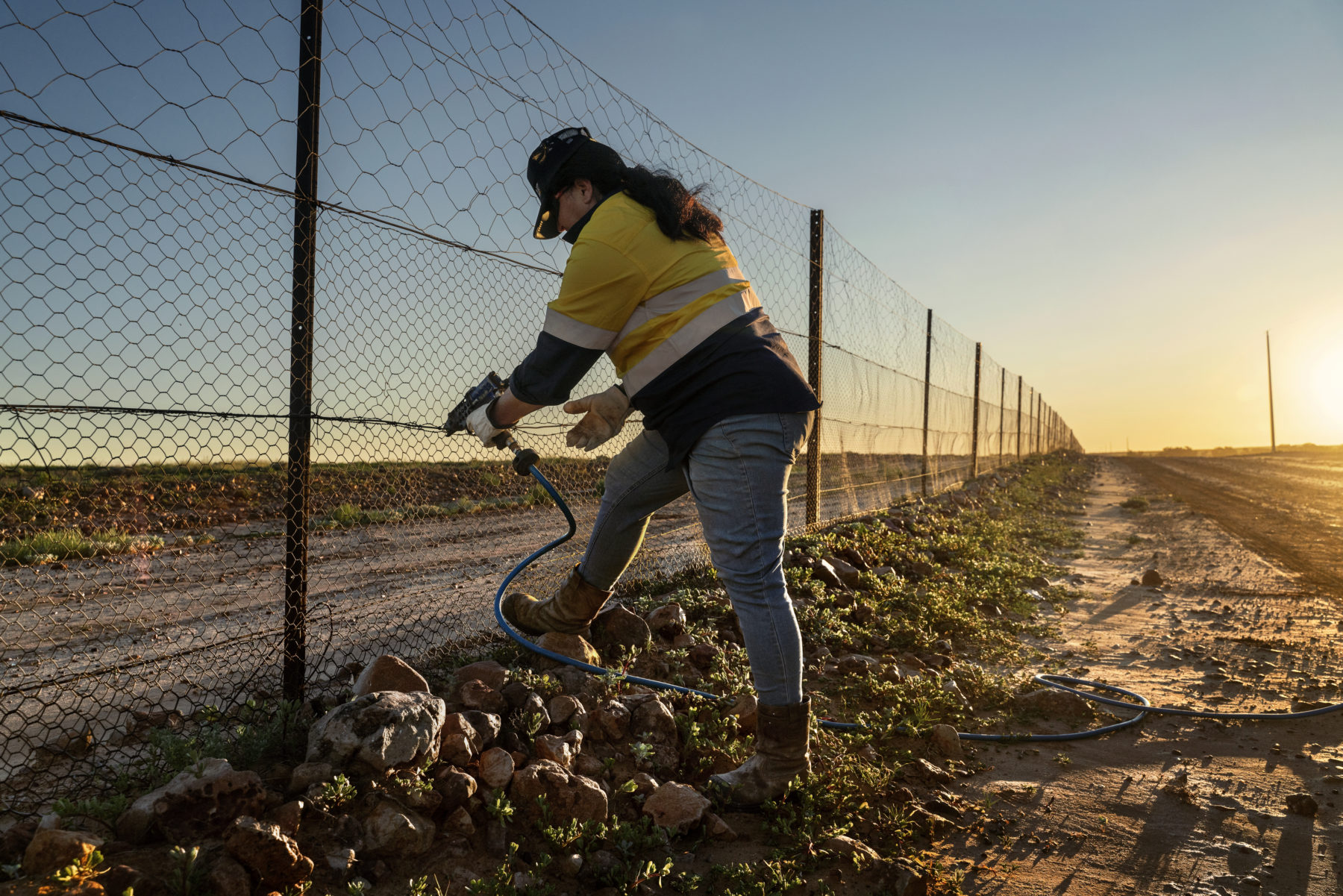
A Fencer Licence in Australia is a formal authorisation that allows a person or business to legally install, repair, or maintain fencing on private or public properties. Fencing work can include timber, metal, wire, pool fencing, and boundary fences.
Licensing ensures that the fencer is:
• Competent and qualified to carry out fencing work safely
• Compliant with state and territory building, safety, and construction regulations
• Legally recognised to perform work that may impact property boundaries or safety
A licensed fencer is typically authorised to:
• Install boundary fences on residential, commercial, and industrial properties
• Repair or replace damaged fences
• Construct safety and pool fences in compliance with Australian Standards (AS 1926.1 for pool fencing)
• Work with a variety of materials: timber, metal, chain-wire, PVC, and composite fencing
• Ensure fencing complies with local council regulations and property boundaries
Fencer licensing in Australia varies by state or territory, but generally falls under the broader builder or trade contractor licence categories.
Depending on the type of fencing work, different licences or endorsements are required.
Description:
This is the most common type of fencer licence, allowing the holder to install, repair, and maintain boundary, security, and feature fences on residential or commercial properties.
Scope of Work:
• Timber, colorbond, chain-wire, PVC, or metal fences
• Retaining and post-supported fencing
• Boundary and privacy fencing
• Minor gate installation
Applicable States/Territories:
• NSW: Trade Licence under NSW Fair Trading (Fencing Work)
• QLD: QBCC Trade Contractor Licence – Structural Landscaping (Fencing)
• VIC: Domestic Builder – Limited (Fencing) under VBA
Description:
Authorises the holder to install or repair pool safety barriers and fences compliant with Australian Standard AS 1926.1 – Safety Barriers for Swimming Pools.
Scope of Work:
• Installation and maintenance of pool safety barriers
• Compliance inspections for pool safety standards
• Gates and self-closing mechanisms
Applicable States/Territories:
• NSW: Must comply with Building Code of Australia (BCA) and local council laws
• QLD: Requires a QBCC Pool Safety Licence
• VIC: Must follow VBA pool safety and compliance regulations
Description:
Covers large-scale fencing for industrial, agricultural, or commercial sites such as warehouses, schools, farms, and public infrastructure.
Scope of Work:
• Chain-mesh and security fencing
• Barbed wire or electric fences (with relevant endorsements)
• Acoustic or noise barrier fences
• Heavy-duty metal and steel fencing
Applicable States/Territories:
• WA: Regulated by DMIRS (WorkSafe WA) for commercial operations
• QLD & NSW: Require relevant trade contractor or structural landscaping licence
Description:
Covers fencing work as part of broader landscaping or outdoor construction projects. Often used by landscape contractors who include fencing as part of their services.
Scope of Work:
• Timber, retaining wall, and decorative fencing
• Paving and minor earthworks associated with fencing
• Integration with garden or outdoor projects
Applicable States/Territories:
• QLD: QBCC Structural Landscaping Licence
• NSW: Trade Contractor (Fencing & Landscaping) category
Description:
For installation of electrified or alarmed security fences around commercial or agricultural properties.
Scope of Work:
• Electric perimeter fencing
• Integration with security systems (alarms, CCTV)
• Maintenance and fault diagnosis
Additional Requirements:
• Electrical or security system endorsement (if fence connects to a power source)
• May require separate Security Installer Licence (depending on state)
Applicable States/Territories:
• QLD, VIC, WA: Require additional endorsements or electrical licence components
Description:
Allows the holder to install and maintain temporary safety barriers or site fences for construction zones and public events.
Scope of Work:
• Temporary mesh or barricade systems
• Site access control fencing
• Compliance with Work Health and Safety (WHS) standards
Applicable States/Territories:
• All states – may not require a specific licence but must follow WHS and local council guidelines
|
Licence Type |
Main Work Area |
Example Regulator |
|
General/Structural Fencer |
Residential & boundary fencing |
NSW Fair Trading / QBCC / VBA |
|
Pool Fencer |
Pool safety barriers |
QBCC / VBA / Local Councils |
|
Commercial & Industrial Fencer |
Security, industrial, and public sites |
DMIRS / QBCC / Fair Trading |
|
Structural Landscaping (Fencing) |
Outdoor/landscape projects |
QBCC / NSW Fair Trading |
|
Electric/Security Fencer |
Electrified or alarm fencing |
QBCC / DMIRS / VIC Police Licensing |
|
Temporary Fencer |
Construction & event sites |
Local councils / WHS authorities |
The types of Fencer Licensing in Australia depend on the type and scope of fencing work — from residential and pool fences to industrial and electric security barriers.
Licensing is managed by each state or territory’s building authority (e.g., QBCC, NSW Fair Trading, VBA), ensuring that all fencers are trained, insured, and compliant with safety and building regulations.
Fencing is considered a specialised trade in Australia. To obtain a licence, individuals must demonstrate competency, safety awareness, and regulatory knowledge. The requirements vary slightly between states and territories, but the framework is generally similar.
Before applying for a fencer licence, applicants must typically meet the following criteria:
• Minimum Age: 18 years
• Construction Induction Card (White Card): CPCCWHS1001 – Construction induction training
• Proof of Identity: Government-issued ID (passport, driver licence)
• Experience or training in fencing work
Applicants must complete nationally recognised fencing training through a Registered Training Organisation (RTO).
Core Training Units:
|
Course / Unit |
Description |
|
CPC40120 – Certificate IV in Building and Construction (or equivalent) |
For supervisory or advanced fencing roles; often required for commercial licences |
|
CPC40110 / CPC40220 – Certificate IV in Building and Construction (Specialist) |
Covers planning, installation, and compliance for fencing work |
|
CPCCCM2008 – Erect and dismantle small free-standing structures |
Optional for structural fence installation |
|
CPC30220 – Certificate III in Carpentry (Fencing focus) |
Residential and standard fencing installation |
|
CPCCBC4001 – Apply building codes and standards |
Ensures knowledge of BCA and local regulations |
Training Covers:
• Fence installation techniques (timber, metal, PVC, chain-wire)
• Gate and post installation
• Pool safety fencing requirements (AS 1926.1)
• Working with tools and machinery safely
• Understanding building codes, property boundaries, and council regulations
• Workplace Health and Safety (WHS) compliance
Most states require hands-on experience under supervision:
• Typically 12–24 months of practical fencing work
• Demonstration of competency in:
• Installing and repairing fences
• Measuring and aligning posts and panels
• Working safely on construction sites
• Logbook or employer references may be required to validate experience
Applicants must demonstrate competency through:
Practical Assessment:
• Installing a boundary fence, gate, or pool barrier
• Correct use of tools and equipment
• Safe working practices
Theory Assessment:
• Knowledge of WHS requirements
• Building codes and standards (BCA, local council regulations)
• Fence material selection and installation techniques
Assessments are usually conducted by the RTO or a recognised assessor accredited by the state authority.
NSW:
• Must hold a Trade Licence (Fencing) through NSW Fair Trading
• Evidence of training and experience required
QLD:
• Requires QBCC Trade Contractor Licence in fencing or structural landscaping
• Certificate III or IV recommended
VIC:
• Domestic Builder Limited – Fencing licence via VBA
• Pool fencing requires additional compliance training
WA / SA / TAS / ACT / NT:
• Licensing and recognition depend on local building authorities
• Practical experience and WHS training are mandatory
Applicants may need to show proof of:
• Public Liability Insurance
• Workers’ Compensation Insurance (if employing staff)
• Ensures coverage for property damage, personal injury, and legal compliance
|
Requirement |
Details |
|
Minimum Age |
18 years |
|
White Card |
CPCCWHS1001 – Construction Induction |
|
Training |
Certificate III/IV in Building & Construction or specialised fencing units |
|
Practical Experience |
12–24 months supervised fencing work |
|
Assessment |
Practical and theory assessments by RTO |
|
State Licence |
Trade Licence / QBCC / VBA depending on state |
|
Insurance |
Public Liability and Workers’ Compensation (if applicable) |
To obtain a Fencer Licence in Australia, you must complete recognised training (Certificate III/IV or equivalent), gain hands-on experience, pass practical and theory assessments, hold a White Card, and apply to the state or territory building authority. Pool, commercial, and specialised fencing work may require additional qualifications and endorsements.
Failing to follow safety practices, AS standards, or council regulations:
• Individual fines: $5,000–$20,000
• Company fines: $50,000+
• Possible prohibition notices or mandatory rectification of work
State/Territory Verification Authorities
|
State/Territory |
Licensing Authority |
Verification Link / Notes |
|
New South Wales (NSW) |
Verify NSW |
verify.licence.nsw.gov.au |
|
Victoria (VIC) |
Building and Plumbing Commission (BPC) |
vba.vic.gov.au |
|
Queensland (QLD) |
Queensland Building and Construction Commission (QBCC) |
qbcc.qld.gov.au |
|
Western Australia (WA) |
Western Australian Government |
wa.gov.au |
|
South Australia (SA) |
Consumer and Business Services |
cbs.sa.gov.au |
|
Tasmania (TAS) |
Consumer, Building and Occupational Services |
cbos.tas.gov.au |
|
Australian Capital Territory (ACT) |
Access Canberra |
accesscanberra.act.gov.au |
|
Northern Territory (NT) |
NT Building Practitioners Board |
bpb.nt.gov.au |
• Fencing Labourer / Assistant
• Fencer / Fence Installer (Tradesperson)
• Lead Fencer / Site Leader
• Fencing Project Manager / Supervisor
• Welder & Fabricator (Fencing Specialist)
Average earnings for fencers in Australia are estimated at approximately AUD $73,000–$80,000 per year for typical full-time roles.
Industry job listings and salary data indicate a common range around $70,000–$85,000 per year depending on experience and location.
Many job ads list rates around $35–$45 per hour or higher for full-time and casual positions.
Glassdoor and other employer data indicate base pay approximately $26–$31/hr on average, with higher reported earnings depending on experience.
Entry Level: Around $45,000–$55,000 per year — common for junior or assistant roles.
Mid-Level: Around $60,000–$75,000 with experience.
Experienced / Senior / Supervisory: Some experienced fencers or contractors may earn over $90,000 — especially if supervising, specialising (e.g., automated gates/security fencing), or running their own business.