
Joiner

Joiner


๐Ÿ‡ฆ๐Ÿ‡บ Introduction

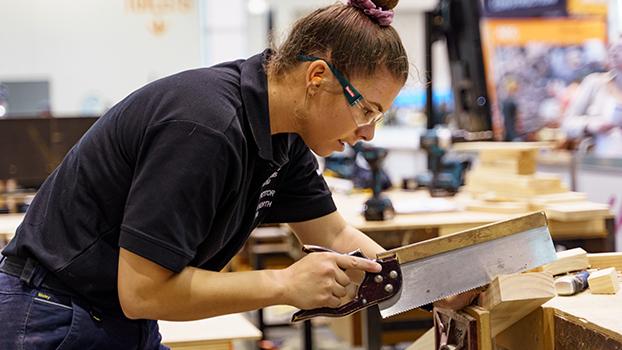
A joiner is a skilled wood tradesperson who fabricates and assembles timber parts—often in a workshop—before installing them on-site. Joiners focus on precision woodwork, unlike carpenters who typically handle on-site construction and framing.

Typical joinery work includes:

•         Constructing and fitting windows, doors, and staircases

•         Producing fitted furniture, cabinetry, and shelving

•         Building timber frames, architraves, and skirting boards

•         Restoring or reproducing heritage or architectural timberwork


๐Ÿ‡ฆ๐Ÿ‡บ Types

Here’s a detailed overview of the types of joiner licensing in Australia, broken down by state and territory.
Since joinery work overlaps with cabinet making, shopfitting, and carpentry, licensing classifications differ slightly depending on each jurisdiction’s building regulations.


1. New South Wales (NSW)

Regulator: NSW Fair Trading
Licence Types:

•         Joinery Licence (under Carpentry and Joinery category)
Allows construction, installation, or repair of timber fixtures such as doors, windows, stairs, and frames.

•         Contractor Licence – required to operate a joinery business or advertise for work.

•         Qualified Supervisor Certificate – required for supervising others.

•         Endorsed Tradesperson Certificate – for employees performing licensed work under supervision.

Typical Joinery Scope:

•         Timber fittings and fixtures (windows, doors, frames, cabinets)

•         Structural and decorative joinery installations


2. Victoria (VIC)

Regulator: Victorian Building Authority (VBA)
Licence Types:

•         No specific “joiner licence” — joinery work is regulated under:

•         Carpentry Registration or Licence (Domestic Builder – Limited to Carpentry)

•         Cabinet Maker / Joiner Trade Qualification

•         For large projects, joiners must be registered as a Domestic Builder (Limited) if contracting directly with clients.

Scope:

•         Custom timber fittings, furniture, staircases, and frames within residential builds.


3. Queensland (QLD)

Regulator: Queensland Building and Construction Commission (QBCC)
Licence Types:

•         Carpentry Licence – covers joinery work for timber components fixed to buildings.

•         Shopfitting Licence – includes detailed joinery work for commercial interiors.

•         Cabinetmaking Licence – covers internal joinery and furniture manufacture.

Scope:

•         Residential and commercial timber joinery installations.

•         Joiners must hold the relevant licence to contract or supervise work valued above $3,300 (incl. materials and labour).


4. Western Australia (WA)

Regulator: Department of Mines, Industry Regulation and Safety (DMIRS)
Licence Types:

•         No specific joiner licence; joiners typically operate under a builder’s registration or as qualified tradespersons.

•         Trade Certificate in Joinery required for formal recognition of skills.

Scope:

•         Workshop-based timber fabrication, staircases, windows, and door assemblies for installation on construction sites.


5. South Australia (SA)

Regulator: Consumer and Business Services (CBS)
Licence Types:

•         Building Work Contractor Licence – required to operate a joinery business.

•         Building Work Supervisor Registration – required to oversee joinery or carpentry work.

Scope:

•         Fabrication and installation of timber joinery elements for residential and commercial buildings.


6. Tasmania (TAS)

Regulator: Consumer, Building and Occupational Services (CBOS)
Licence Types:

•         Joiner / Carpenter Licence under the Building Services Provider Licence scheme.

•         Builder – Restricted (Joinery) licence may be required for large-scale or structural installations.

Scope:

•         Joinery, cabinetry, and built-in timber components for domestic and commercial structures.


7. Northern Territory (NT)

Regulator: Building Practitioners Board
Licence Types:

•         Building Contractor Licence (Residential or Restricted) – may include joinery work.

•         Trade Qualification – Certificate III in Joinery or Cabinet Making required for recognition.

Scope:

•         Fabrication and installation of timber doors, windows, and built-in fixtures.


8. Australian Capital Territory (ACT)

Regulator: Access Canberra
Licence Types:

•         Joinery is classified under Carpentry or Shopfitting Licence categories.

•         Endorsed Building Practitioner Licence required for independent contracting.

Scope:

•         Timber frames, doors, furniture fittings, and custom joinery for residential and commercial premises.


๐Ÿ‡ฆ๐Ÿ‡บ Qualifications

Here’s a detailed overview of the qualifications required to obtain a Joiner Licence in Australia, including both national training standards and state-by-state variations.


1. National Qualification Standard

Across Australia, the minimum qualification to become a licensed joiner is generally a Certificate III in Joinery (CPC31920) or an equivalent recognised trade qualification.

๐ŸŽ“ Core Qualification

Course Title: CPC31920 – Certificate III in Joinery
Training Package: CPC Construction, Plumbing and Services Training Package

Duration: 3–4 years (typically through an apprenticeship)
Delivery: TAFE or Registered Training Organisation (RTO)

Core Skills and Units Include:

•         Reading and interpreting plans and specifications

•         Manufacturing timber joinery components (doors, windows, stairs)

•         Assembling and installing joinery and furniture

•         Operating woodworking machinery safely

•         Using computer-aided machinery (CNC and CAD systems)

•         Workplace safety and quality assurance (WHS compliance)

Equivalent Qualifications:

•         CPC31912 – Certificate III in Joinery (older version)

•         MSF31113 – Certificate III in Cabinet Making (Furniture or Timber)

•         CPC30220 – Certificate III in Carpentry (for combined carpentry and joinery roles)


๐Ÿงฐ 2. Additional Licensing or Registration Requirements (by State)

New South Wales (NSW) – NSW Fair Trading

•         Must hold CPC31920 Certificate III in Joinery or equivalent.

•         Require at least 2 years’ practical experience after completing training.

•         Apply for one of:

•         Contractor Licence (to operate a business)

•         Qualified Supervisor Certificate (to supervise work)

•         Tradesperson Certificate (to work under supervision)

Example RTOs: TAFE NSW, Master Builders NSW


Victoria (VIC) – Victorian Building Authority (VBA)

•         Qualification: Certificate III in Joinery or Carpentry

•         For direct contracting or running a business:

•         Must register as a Domestic Builder (Limited to Carpentry/Joinery)

•         Experience: Minimum 3 years relevant work experience under a registered builder or employer.

•         Evidence of competency and project work required in application.


Queensland (QLD) – QBCC (Queensland Building and Construction Commission)

•         Must hold one of the following:

•         CPC31920 – Certificate III in Joinery

•         CPC30220 – Certificate III in Carpentry

•         MSF31113 – Certificate III in Cabinet Making (for interior joinery)

•         Experience: Minimum 2 years’ trade experience.

•         Must also pass technical and managerial assessments for a contractor licence.


Western Australia (WA) – DMIRS

•         Joiners are not separately licensed, but qualifications are required for trade recognition:

•         Certificate III in Joinery or Cabinet Making

•         Recognition of Prior Learning (RPL) available for experienced workers.

•         For larger-scale building work, builder registration may be required.


South Australia (SA) – CBS (Consumer and Business Services)

•         Must hold CPC31920 Certificate III in Joinery (or equivalent).

•         Must demonstrate business knowledge and supervision experience for contractor or supervisor registration.

•         Recognition of trade experience accepted through RPL or trade testing.


Tasmania (TAS) – CBOS (Consumer, Building and Occupational Services)

•         Certificate III in Joinery or Carpentry is mandatory.

•         For business or independent work:

•         Must be a Licensed Builder – Restricted (Joinery).

•         Work experience requirement: at least 3 years post-apprenticeship.


Northern Territory (NT) – Building Practitioners Board

•         Requires Certificate III in Joinery or Cabinet Making.

•         Evidence of practical trade experience required.

•         For building work or supervision: Building Contractor Licence or Supervisor Registration is needed.


Australian Capital Territory (ACT) – Access Canberra

•         Joinery falls under Carpentry/Shopfitting licensing.

•         Must hold Certificate III in Joinery, Carpentry, or Cabinet Making.

•         2–3 years’ post-trade experience recommended for licensing.


๐Ÿงพ Other Requirements Across States

•         White Card (General Construction Induction Card) – mandatory for all construction-related work.

•         Public liability insurance (for contractor applicants).

•         Business or financial competency (for contractor licence applicants).

•         Trade test or portfolio of completed work (for some states, e.g., VBA or QBCC).


โœ… Summary

State/Territory

Minimum Qualification

Experience Required

Licensing Authority

NSW

Certificate III in Joinery

2+ years

NSW Fair Trading

VIC

Certificate III in Joinery/Carpentry

3+ years

VBA

QLD

Certificate III in Joinery/Carpentry

2+ years

QBCC

WA

Certificate III in Joinery

Varies

DMIRS

SA

Certificate III in Joinery

2–3 years

CBS

TAS

Certificate III in Joinery/Carpentry

3+ years

CBOS

NT

Certificate III in Joinery

2+ years

Building Practitioners Board

ACT

Certificate III in Joinery/Carpentry

2–3 years

Access Canberra


Compliance and Penalties

•         Rectification orders + fines up to $20,000–$50,000

•         $50,000 – $3 million (for serious or reckless conduct)

•         Licence suspension or criminal prosecution


Where to Verify a License

State/Territory Verification Authorities

State/Territory

Licensing Authority

Verification Link / Notes

New South Wales (NSW)

Verify NSW

verify.licence.nsw.gov.au

Victoria (VIC)

Building and Plumbing Commission (BPC)

vba.vic.gov.au

Queensland (QLD)

Queensland Building and Construction Commission (QBCC)

qbcc.qld.gov.au

Western Australia (WA)

Western Australian Government

wa.gov.au

South Australia (SA)

Consumer and Business Services

cbs.sa.gov.au

Tasmania (TAS)

Consumer, Building and Occupational Services

cbos.tas.gov.au

Australian Capital Territory (ACT)

Access Canberra

accesscanberra.act.gov.au

Northern Territory (NT)

NT Building Practitioners Board

bpb.nt.gov.au


Career Roles

•         Residential Joiner

•         Commercial Joiner

•         Cabinet Maker / Furniture Joiner

•         Shopfitter / Interior Joiner

•         Heritage or Restoration Joiner

•         Joinery Supervisor / Foreperson

•         Self-Employed Joiner / Contractor

•         Production Draftsperson / CAD Joiner

•         Estimator or Project Manager (Joinery)

         Building and Construction (residential and commercial)

         Furniture and Cabinetmaking

         Interior Design and Fit-Out

         Manufacturing and Production

         Heritage and Restoration

         Government or Defence Infrastructure Projects

         Education and Training (TAFE or RTOs)


Job Outlook and Salary

Based on recent data for joiners in Australia (which will naturally vary by state, experience, role and whether working on site or manufacturing):

•         Average annual salary: around A$60,300 per year (≈ A$30.51/hour) according to Jobted.

•         Related job-boards and salary aggregators suggest typical salary ranges between A$75,000 and A$85,000 for joiners.

•         Entry-level joiners might begin in the ~A$40,000-A$50,000 range. (Jobted: entry ~ A$43,958)

•         With experience and/or specialising, joiners can earn in the ~A$70,000-A$90,000+ range.