
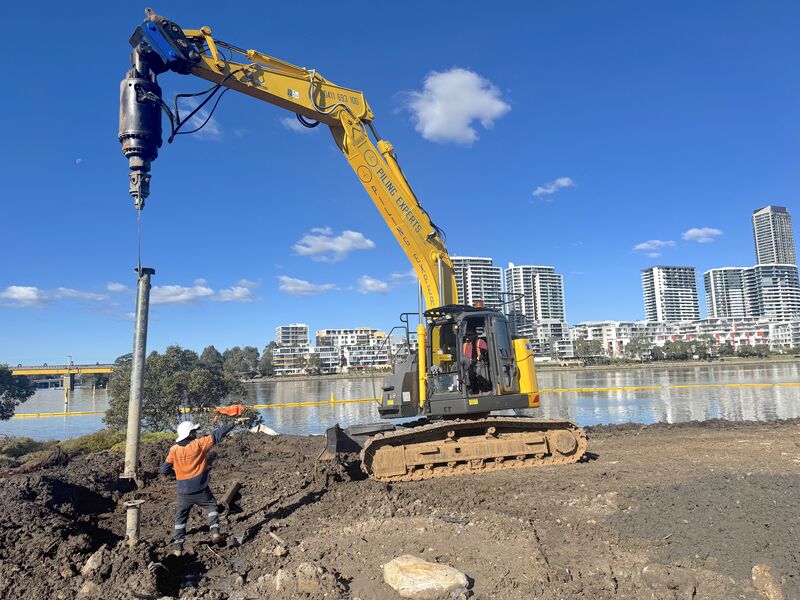
Piler

Piler


πŸ‡¦πŸ‡Ί Introduction

A piler licence in Australia refers to a construction or plant operation licence that authorises an individual or business to operate piling equipment and perform foundation piling work for structures such as buildings, bridges, or retaining walls.

While not every state uses the term “piler licence” directly, the occupation is formally covered under the categories of:

•         Piling and Foundation Work

•         Foundation Construction and Ground Engineering

•         Rigging or Plant Operation (Piling Equipment)

This licensing ensures that individuals operating heavy piling rigs, installing driven piles, or conducting deep foundation work are qualified, competent, and compliant with safety and engineering standards.

The purpose of licensing or accreditation for piler work is to ensure:

•         Workplace safety when operating heavy machinery and rigs.

•         Competency and technical skill in soil mechanics, structural load-bearing, and foundation design.

•         Compliance with engineering and construction standards, such as the National Construction Code (NCC) and AS 2159 – Piling – Design and Installation.

•         Accountability for quality and environmental standards during deep foundation work.


πŸ‡¦πŸ‡Ί Types

“Piler licensing” in Australia refers to the regulatory permissions needed to operate piling machinery, install structural foundations, or contract piling works.
Depending on the state or work type, piling may fall under building, civil, or high-risk work licensing systems.


βš™οΈ 1. Building or Contractor Licensing (Structural or Foundation Work)

This type of licence allows individuals or companies to contract, supervise, and carry out foundation and piling work on building or infrastructure projects.
Each state and territory has its own licence category for this type of work.

State/Territory

Licence Type

Issued By

Covers

NSW

Structural Engineering or Specialist Contractor (Piling Work)

NSW Fair Trading

Installation of piles, retaining structures, or deep foundations

QLD

Foundation Contractor Licence or Structural Trade Contractor (Piling)

QBCC

Piling, bored piers, underpinning, and deep foundation work

VIC

Registered Building Practitioner – Structural (Piling)

Victorian Building Authority (VBA)

Foundation and structural piling for domestic or commercial buildings

WA

Building Contractor / Practitioner (Structural or Civil – Piling)

Building & Energy WA

Driven, bored, or screw piling for civil and structural projects

SA

Building Work Contractor (Piling or Ground Engineering)

Consumer and Business Services (CBS)

Piling, retaining walls, and foundation systems

TAS

Builder – Foundation Work (Restricted)

CBOS

Piling and ground improvement for building foundations

ACT

Construction Occupation Licence – Structural or Civil

Access Canberra

Foundation piling, underpinning, and drilling

NT

Building Practitioner – Structural Engineering (Piling)

Building Practitioners Board NT

Foundation piling and structural earthworks

βœ… Purpose: Authorises business or contracting work involving piling as part of construction or engineering projects.
πŸ”§ Required Qualification: Certificate III or IV in Civil Construction (Piling or Foundations) or equivalent experience.


🚜 2. High-Risk Work Licence (HRWL) – Piling Equipment Operation

This national licence type authorises workers to operate heavy machinery and piling rigs used in deep foundation construction.
It’s regulated under Work Health and Safety (WHS) laws across all states and territories.

Licence Class

Issued By

Authorises

High-Risk Work Licence – Rigging (Advanced or Intermediate)

SafeWork / WorkSafe in each state

Setting up, moving, and operating piling and drilling rigs

High-Risk Work Licence – Dogging (DG Class)

SafeWork / WorkSafe

Slinging and directing loads during pile installation

Heavy Plant Operator Ticket (Non-HRWL)

Registered Training Organisation (RTO)

Operating specific piling rigs, excavators, cranes, and augers

Construction White Card

SafeWork or RTOs

Mandatory for all construction site work (safety induction)

βœ… Purpose: Ensures safe and competent machinery operation for piling activities.
πŸ”§ Required Qualification: Nationally recognised unit, e.g., RIIHAN307E – Operate a Piling Rig.


🧱 3. Engineering Registration (Professional Supervision of Piling Work)

For engineers or technical specialists who design, certify, or supervise piling systems.

Licence/Registration

Issued By

Covers

Professional Engineer Registration (Civil/Structural)

Engineers Australia or state boards (e.g., VIC, QLD, NSW)

Pile design, load testing, and foundation engineering supervision

Design Practitioner Registration (Structural – Piling)

NSW Fair Trading (Design and Building Practitioners Scheme)

Structural design and certification of piling work

βœ… Purpose: Allows professional engineers to oversee, design, and certify piling work to structural and geotechnical standards.
πŸ”§ Required Qualification: Bachelor’s in Civil or Structural Engineering + registration as a Professional Engineer (RPEQ, RPEng, or equivalent).


🌏 4. Industry and Plant-Specific Certifications

Beyond licensing, some piling roles require equipment-specific or site safety certifications:

•         VOC (Verification of Competency) for particular piling rigs or cranes.

•         Confined Spaces and Working at Heights tickets.

•         Environmental Management (for coastal or marine piling).

•         AS 2159: Piling – Design and Installation training.

βœ… Purpose: Provides evidence of competency and site safety compliance.
πŸ”§ Issued By: Registered Training Organisations (RTOs) or employers accredited under WHS schemes.


βš–οΈ Summary Table

Category

Licence Type

Scope

Regulator

Contractor Licence

Building / Structural / Piling Contractor

Carrying out and supervising piling work

State Building Authority

Machinery Operation

High-Risk Work Licence (Rigging, Dogging)

Operating piling rigs, cranes, or augers

SafeWork / WorkSafe

Engineering

Professional Engineer or Design Practitioner

Designing or certifying piling systems

Engineers Australia / State Board

Equipment Competency

VOC / Plant Ticket

Machine-specific operation

RTOs / Employers


βœ… In Summary

•         Piling licences exist in several forms—contractor, operator, and engineering supervision.

•         Licensing ensures safety, structural integrity, and regulatory compliance in all piling projects.

•         Piler licence requirements differ slightly between states, but all emphasise qualification, competence, and adherence to WHS and structural standards.


πŸ‡¦πŸ‡Ί Qualifications

To become a licensed piler (or to carry out piling and deep foundation work) in Australia, applicants must demonstrate technical qualifications, industry experience, and safety training.
The exact requirements vary by state and licence class — whether you’re a contractor, equipment operator, or engineer supervising piling work.


βš™οΈ 1. Core Trade Qualification (Mandatory for Most Piling Licences)

The base qualification recognised nationally for piling work is:

πŸŽ“ Certificate III in Civil Construction (Piling or Foundations)

National Code: RII31220 – Certificate III in Civil Foundations (or earlier version RII31215)
Training Package: Resources and Infrastructure Industry (RII)

Covers:

•         Operating piling rigs, drills, and cranes

•         Constructing bored and driven piles

•         Reading and interpreting plans and drawings

•         Ground preparation, concrete placement, and reinforcement

•         Applying workplace health and safety (WHS) principles

Typical Units Include:

•         RIIHAN307E – Operate a piling rig

•         RIICCM210E – Install trench support systems

•         RIICCM207E – Spread and compact materials manually

•         RIIWHS302E – Implement traffic management plans

Delivery:

•         Through Registered Training Organisations (RTOs) such as TAFE or civil construction training centres

•         Duration: 1–2 years (apprenticeship or on-the-job training)

βœ… Required For:

•         Piling contractors and workers seeking building or trade licences

•         Employees operating piling rigs or undertaking structural foundation works


🚜 2. Machinery and Equipment Operation (High-Risk Work Licensing)

Because piling work involves heavy plant and machinery, you’ll often need additional high-risk work authorisations:

πŸ”§ High-Risk Work Licence (HRWL)

Issued By: SafeWork (NSW), WorkSafe (VIC, WA), or equivalent WHS regulator

Relevant Classes:

•         DG – Dogging (directing loads and slinging equipment)

•         RB/RI/RA – Rigging (Basic/Intermediate/Advanced) – for pile driving or setting heavy structures

Prerequisite: Completion of accredited training through an RTO and assessment by a WorkSafe-accredited assessor.

πŸ—οΈ Plant and Equipment Tickets

•         For operating piling rigs, cranes, augers, or drilling equipment.

•         Provided as Verification of Competency (VOC) or Statement of Attainment by an RTO.

•         Required by most employers before operating piling machinery on-site.

βœ… Required For:
Operators and site workers performing physical piling or foundation drilling.


🧾 3. Building Contractor or Structural Licence (For Business or Supervision)

If you intend to contract piling work or supervise projects, you must apply for a building or structural contractor licence in your state or territory.
These require higher-level qualifications, experience, and business knowledge.

State/Territory

Licence Type

Typical Qualification Required

NSW

Specialist Contractor – Piling

Certificate III or IV in Civil Construction (Piling), plus 2 years’ experience

QLD

Trade Contractor Licence – Foundation or Piling Work

Certificate III in Civil Construction (Piling) + managerial qualification (BSBESB402)

VIC

Registered Building Practitioner (Structural – Piling)

Certificate IV or Diploma in Civil/Structural Construction, 3 years’ experience

WA

Building Contractor or Practitioner – Piling

Certificate IV in Building and Construction (Building or Civil) + experience record

SA

Building Work Contractor – Foundation/Piling

Certificate III or higher in Civil Construction, proof of competence

TAS / ACT / NT

Building or Structural Licence

Certificate III or IV, evidence of experience and WHS competency

βœ… Required For:
Business owners, subcontractors, or supervisors managing piling projects above the residential licensing threshold (typically $3,300–$10,000).


πŸ§‘‍πŸ”¬ 4. Engineering or Design Qualification (For Piling Design and Certification)

For engineers responsible for designing or certifying piling systems, the following qualifications apply:

πŸŽ“ Bachelor of Engineering (Civil or Structural)

•         Accredited by Engineers Australia.

•         Enables registration as a Professional Engineer (RPEng, RPEQ, or state equivalent).

•         Required to design and sign off on structural pile foundations and load-bearing systems.

πŸ“œ Additional Registration

•         NSW: Design Practitioner – Structural (Piling)

•         VIC: Professional Engineer Registration

•         QLD: RPEQ (Registered Professional Engineer of Queensland)

βœ… Required For:
Supervisors or designers responsible for pile design, load testing, and certification to AS 2159.


🦺 5. Mandatory Safety and Industry Compliance Training

All piling workers and contractors must hold the following certifications:

•         Construction White Card (CPCWHS1001) – Mandatory for all site workers.

•         First Aid and CPR Certification – Strongly recommended.

•         Site-Specific Safety Induction (as per project requirements).

•         Environmental and Erosion Control Training (for marine or sensitive sites).

βœ… Required For:
Every individual entering or working on a construction or piling site.


βš–οΈ 6. Recommended Advanced or Supplementary Qualifications

While not mandatory, these enhance employability and compliance readiness:

•         Certificate IV in Civil Construction Supervision (RII40720) – For supervisors and team leaders.

•         Diploma of Civil Construction Management (RII50420) – For project managers or estimators.

•         Training in AS 2159:2019 (Piling – Design and Installation) – For quality assurance and inspection roles.


βœ… Summary Table

Qualification Type

Level

Purpose

Certificate III in Civil Construction (Piling)

Trade

Operate piling equipment, install piles

Certificate IV / Diploma in Civil Construction

Advanced Trade

Supervision, project management

High-Risk Work Licence (Rigging/Dogging)

Safety / Operation

Safe handling of piles and lifting equipment

Construction White Card

Mandatory

Basic WHS entry requirement

Professional Engineering Degree

Tertiary

Pile design and structural certification

VOC / Plant Tickets

Competency

Equipment-specific operation

Business Management Unit (BSBESB402)

Business

Required for contractor licensing


🏁 In Summary

To qualify for a piler licence in Australia, you generally need:

•         A Certificate III in Civil Construction (Piling/Foundation) or higher,

•         Relevant experience in piling operations or supervision,

•         WHS and high-risk work certifications, and

•         (If contracting) business and managerial qualifications under state licensing laws.


Compliance and Penalties

•         Unlicensed Piling Work fines up to $50,000 (individual) or $100,000+ (company); possible prosecution

•         Rectification orders, licence suspension, civil liability for damages

•         For Environmental Breach, on-the-spot fines, remediation orders, or prosecution


Where to Verify a License

State/Territory Verification Authorities

State/Territory

Licensing Authority

Verification Link / Notes

New South Wales (NSW)

Verify NSW

verify.licence.nsw.gov.au

Victoria (VIC)

Building and Plumbing Commission (BPC)

vba.vic.gov.au

Queensland (QLD)

Queensland Building and Construction Commission (QBCC)

qbcc.qld.gov.au

Western Australia (WA)

Western Australian Government

wa.gov.au

South Australia (SA)

Consumer and Business Services

cbs.sa.gov.au

Tasmania (TAS)

Consumer, Building and Occupational Services

cbos.tas.gov.au

Australian Capital Territory (ACT)

Access Canberra

accesscanberra.act.gov.au

Northern Territory (NT)

NT Building Practitioners Board

bpb.nt.gov.au


Career Roles

•         Piling Contractor / Foreman

•         Piling Machine Operator

•         Civil Construction Piler

•         Piling Rig Operator

•         Geotechnical or Piling Consultant

•         Site Supervisor / Foreperson (Piling Projects)

•         Construction Business Owner (Piling / Foundations)

•         Piling Estimator / Project Planner

•         Specialist Piler / Artisan

•         Piling Inspector or Compliance Officer

•         Trainer or Assessor (VET / TAFE)


Job Outlook and Salary

·  Entry / early-career piler: Might expect lower salaries—perhaps in the range A$70,000–A$100,000, depending on state, project type, and overtime.

·  Mid-level with solid experience and licences: Could earn around A$100,000–A$130,000+/year.

·  Highly‐skilled specialist, rig operator or supervisor on major infrastructure: Could earn A$140,000–A$160,000+, and possibly more with overtime, allowances, and remote or FIFO projects.

·  For a pile driver, average annual salary is around A$101,578 in Australia.

·  For a pile driver at certain companies (e.g., in specialised piling firms) salaries around A$126,078/year have been reported.

·  For a piling rig operator in Sydney, average salaries around A$150,000/year are being advertised.

·  For a piling supervisor/foreman, salary ranges of about A$120,000–A$160,000/year are common.